Education Policy
The knowledge singularity: preparing education systems for the age of accelerating intelligence
Global knowledge now doubles in 6–12 months. Most curricula refresh every several years. The institutional lag is education’s defining vulnerability.
Originally published on ciai.ai on October 26, 2025. A policy discussion paper from the California Institute of Artificial Intelligence by Bill Faruki, CEO, MindHYVE.ai.
The new velocity of knowledge
Human knowledge has never stood still, but until recently its growth was slow enough for universities, training authorities, and ministries of education to keep pace.
Buckminster Fuller's Knowledge Doubling Curve described a world in which the stock of human knowledge doubled roughly every 100 years in 1900, every 25 years by 1945, and about every 12 months by the early 1980s.
Four decades later, AI systems have collapsed that timeline. Analyses of scientific output and digital information show global knowledge doubling in 6 to 12 months, while the technical capabilities of frontier AI models are doubling roughly every 7 months. Compute resources used for model training have doubled about every 6 months since 2010.
The world's factual, procedural, and technical base expands several times over during the life cycle of a typical university program. The pace of discovery that once unfolded over generations now unfolds between curriculum-approval meetings.
When institutions move at industrial speed
Most education systems still operate on schedules inherited from the industrial age: committee review, regulatory approval, faculty retraining cycles. These safeguards create structural inertia.
By the time a graduate completes a four-year degree, many of the frameworks, tools, and even professional norms taught at entry have already evolved. This creates what analysts call the skills-entropy gap: the rate at which once-relevant competencies decay under technological acceleration.
Consequences for economies and societies
Workforce readiness. The World Economic Forum's Future of Jobs Report 2024 found that barely one-third of global employers consider new graduates “job-ready” for technology-mediated work. Knowledge now outpaces credentialing.
Economic inequality. Countries that cannot update education at the speed of innovation risk locking in structural disadvantage.
Governance and trust. When curricula trail reality, professional licensing and regulation lose credibility. This epistemic lag weakens public trust in both education and government oversight.
Social cohesion. Generational divides widen when younger workers learn informally through online AI tools while formal institutions lag behind. Without coordinated reform, “AI-fluent” elites and “AI-excluded” populations may emerge inside the same societies.
Defining the knowledge singularity
Policymakers can treat “knowledge singularity” not as science fiction but as a policy threshold — the point at which the human institutional cycle (Th) is consistently longer than the knowledge-creation cycle (Tk). When Th > Tk, every reform arrives after the frontier has moved again. Education becomes perpetually retrospective.
Avoiding this trap requires collapsing Th to approach Tk: in plain terms, enabling education to learn at the speed of discovery.
The 21st-century challenge is not access to information. It is synchronization with it.
Emerging models: adaptive and agentic learning systems
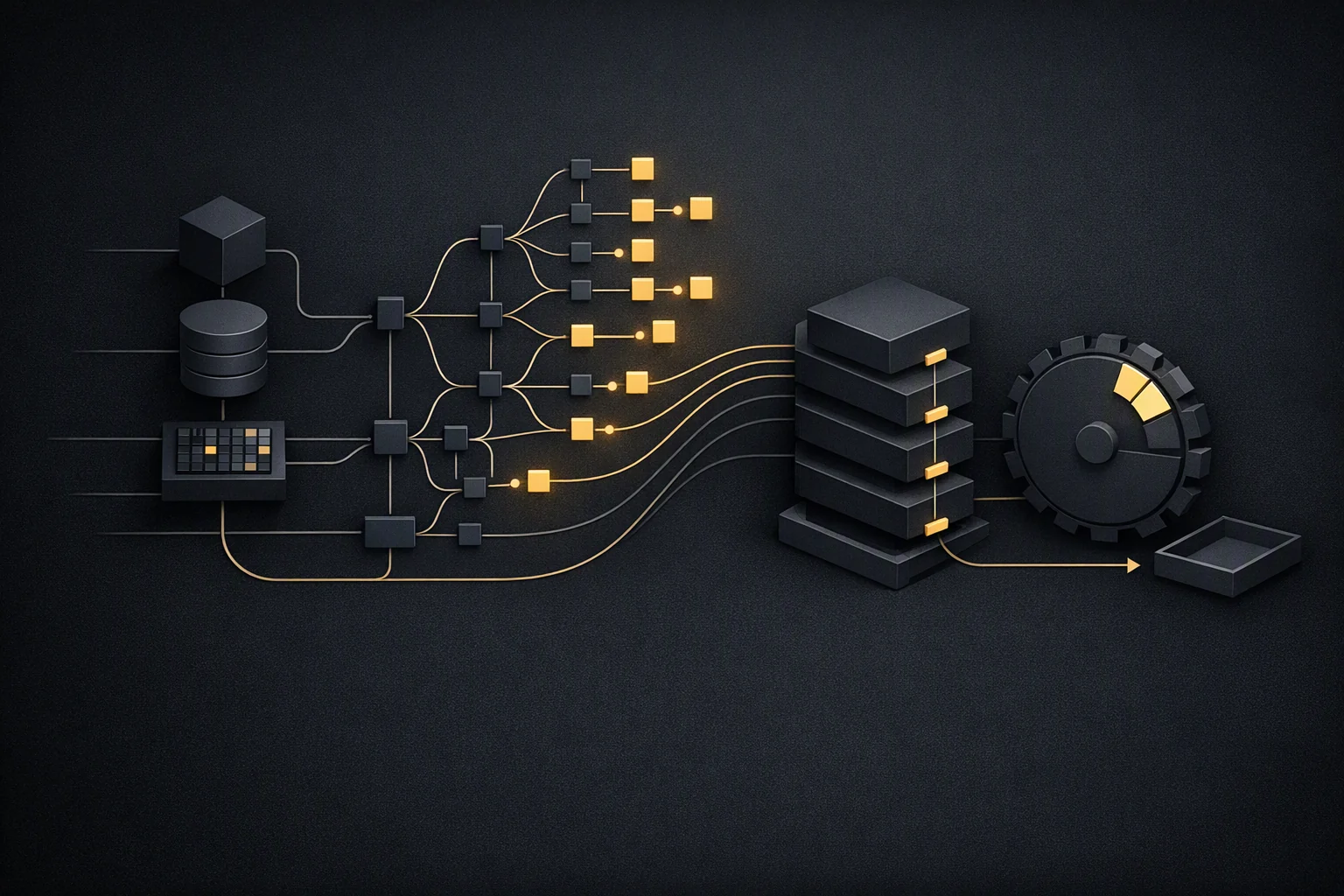
Newer agentic systems — driven by large reasoning models and real-time analytics — can sense, plan, and generate instructional materials autonomously within defined ethical and curricular boundaries.
Core design features include: continuous cognitive profiling (tracking each learner's progress, misconceptions, and preferred modalities in real time); dynamic curriculum generation (synthesizing updated readings, case studies, or simulations from vetted, current data sources); predictive intervention (identifying disengagement or concept gaps before performance declines); and ethical supervision (ensuring all generated materials meet accessibility, privacy, and quality standards).
Agentic Learning Systems such as ArthurAI™ within the MindHYVE™ ecosystem demonstrate how multi-agent frameworks can regenerate lessons, assessments, and analytics dashboards as global knowledge changes. The key point for policy: autonomous adaptation is becoming technically feasible and will soon define competitiveness in education delivery.
Policy options for national education systems
Establish national AI-literacy frameworks. AI fluency — understanding how to interpret, evaluate, and ethically apply AI outputs — should become a foundational skill, akin to digital literacy two decades ago.
Create dynamic-accreditation pathways. Allow institutions to update curricula continuously within broad competency frameworks rather than waiting for multi-year approvals. Regulators should focus on learning outcomes, not static documents.
Incentivize institutional AI-integration labs. Governments can fund “AI-curriculum studios” inside universities to pilot adaptive systems, evaluate bias, and share open standards.
Invest in educator augmentation. Provide teachers with intelligent co-design tools that automate content drafting, freeing human capacity for mentorship, ethics, and critical discussion.
Measure learning velocity. National statistics offices should track time-to-update — the interval between frontier discovery and curricular integration. This becomes a key performance indicator for education resilience.
Ensure inclusion and accessibility. Adaptive technologies must serve multilingual and differently-abled populations.
Global cooperation and ethical framing
No single institution can manage knowledge acceleration alone. CIAI advocates an international Knowledge Velocity Index — a common measure of how rapidly educational systems integrate validated new information.
Education policy must ensure that human judgment remains central, equity guides deployment, and transparency is mandatory. A balanced ecosystem — humans setting goals, AI generating adaptive means — can preserve agency while gaining speed.
Building institutions that learn
The modern knowledge economy is defined not by what societies know, but by how quickly they can relearn. When knowledge doubles annually and capability doubles semi-annually, the true measure of progress becomes adaptation speed.
For policymakers, the imperative is clear: re-engineer education to operate at the velocity of change.
If knowledge is the world's fastest-growing renewable resource, education must become its most agile processor. The nations that achieve this synchronization will define the next century of human progress.
Companion essay
See the operational companion to this policy paper: From static schools to learning institutions: how ArthurAI™ solves the knowledge singularity.