
Engineering Case Study · ArthurAI™
5.8 years of traditional development, compressed into 60 days.
How an Agentic Full-Cycle Engineer at MindHYVE.ai built an enterprise-grade ArthurAI™ surface — 209 discrete features, four user portals, AI-personalized learning, multi-language support, payments, and full enterprise tenancy — in two months.
Originally published on ciai.ai on October 15, 2025. Republished on MindHYVE.ai with canon edits aligning to current product taxonomy (Eve-Education, ArthurAI™ editions, Eve-Fusion™ architecture). The original post was written under the prior naming convention.
The experiment
Two months ago, I started building ArthurAI™ — a comprehensive educational platform with AI-powered personalized learning, multi-language support, payment processing, and enterprise features. I worked alone. Well, not entirely alone — I worked with a frontier AI model as my development partner. Not as a code completion tool. Not as a Stack Overflow replacement. As an actual engineering partner.
The results: I compressed 5.8 years of traditional development into 60 days.
The numbers don't lie
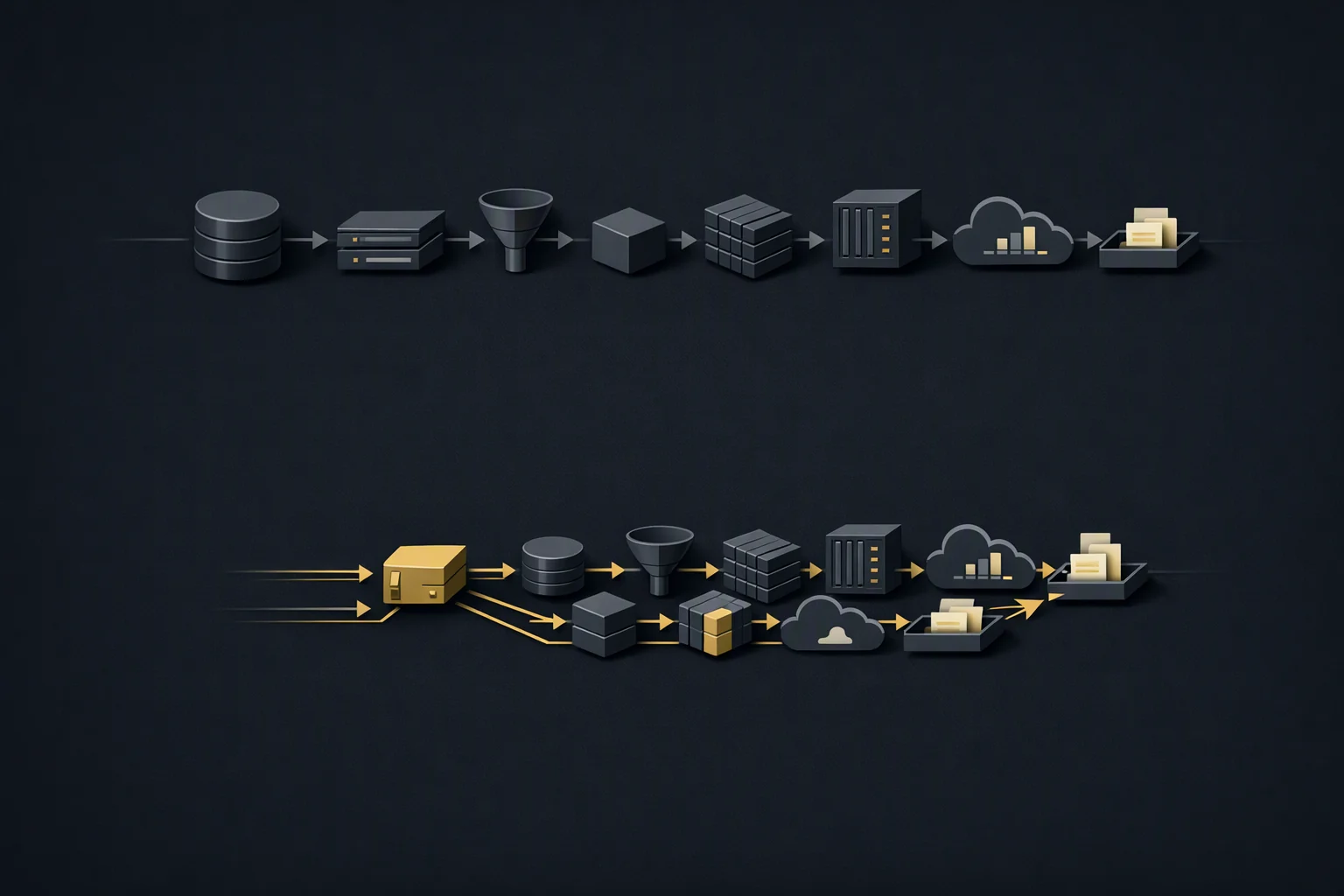
When I finished, I asked the model to estimate how long this same system would take a traditional solo developer to build. The answer: roughly 7,270 base development hours, 10,178 with realistic overhead, 1,500 man-days, 5.8 years for one developer. Or 5 developers × 12 months. Or 10 developers × 6 months. My actual timeline: 60 days. 25× faster. Approximately $500K–$750K in development cost avoided.
How is this even possible?
With traditional development, a solo developer needs to learn new technologies, read documentation for hours per feature, debug typos, search Stack Overflow, write boilerplate, remember best practices, and switch contexts between frontend/backend/database.
With AI-assisted development: zero learning curve — instant expertise across React, Azure Functions, MongoDB, Eve-Education compound reasoning, Stripe. Parallel processing. Pattern recognition from thousands of similar projects. Instant debugging with full context. Complete codebase memory. Production-ready code with error handling, validation, and optimization built in.
What I actually did
I didn't just copy-paste AI-generated code. My role as an “Agentic Full-Cycle Engineer” was to define the vision, make strategic decisions on architecture and tech stack, prompt effectively, integrate components, test rigorously, exercise quality control, and deploy.
I was the architect, product manager, and quality controller. The AI was the implementation engine.
The features speak for themselves
ArthurAI™ isn't a toy or MVP — it's a production-grade platform. Student Portal: AI-generated personalized learning paths, Learning Cognitive Profile (LCP) assessment, multi-language course content (9 languages), text-to-speech, progress tracking, certificate generation. Teacher Portal: student management, course assignment, learning analytics, goal setting, institution integration. Institution Portal: multi-tenant architecture, bulk operations, custom theming, sub-admin permissions, billing, license tracking. Admin Portal: system-wide analytics, user management, token usage tracking, platform health monitoring.
Technical features: serverless Azure Functions backend, Arthur API integration for content generation, Stripe payment processing, background job processing, multi-language i18n with RTL support, responsive design, Application Insights monitoring.
What this means for software development
The solo founder renaissance. A single technical founder can now build enterprise-grade software in weeks or months instead of years. You don't need a co-founder, funding, or years of learning new tech stacks. You need vision, prompting skills, and quality judgment.
The new competitive advantage. Companies that embrace AI-assisted development will move 25× faster than those that don't. They can ship faster, build leaner, and outpace competitors who rely on traditional teams.
The skills that matter. Declining in value: memorizing syntax, writing boilerplate, debugging typos. Increasing in value: product vision, architecture thinking, prompt engineering, quality assessment, testing, UX design.
The democratization of software. Non-technical founders can now build complex systems with AI. A healthcare professional can build healthcare software. A teacher can build education platforms. Domain expertise + AI = competitive advantage.
Lessons from building ArthurAI™
1. Start with architecture. I spent the first week just talking through architecture with the model — database design, API structure, authentication, deployment. That upfront planning prevented major refactors later.
2. Be specific in your prompts. Bad prompt: “Create a user dashboard.” Good prompt: “Create a student dashboard with sections for course progress, upcoming assignments, achievements, and analytics. Use Tailwind CSS with our theme. Make it responsive.” Specificity = quality.
3. Iterate in small chunks. Break big features down: database → API → frontend → integration → testing → refinement. This keeps errors small and progress visible.
4. Maintain context. Keep your AI updated on architecture, naming conventions, code style, priorities. Context is everything.
5. Test everything. AI code is often correct — but “often” isn't enough for production. Test every feature thoroughly.
The bottom line
ArthurAI™ — a comprehensive surface with 209 features, 4 portals, AI integration, and enterprise capabilities — built in 60 days. Traditional estimate: 5.8 years. That's a 25× acceleration and a 2,400% productivity increase.
This isn't the future. This is now.
The question isn't whether AI will transform software development. The question is: will you leverage it — or be left behind?